
Soft-tissue contouring
Selected gum-shape concerns may be considered after gum health, tooth position and biological limits are assessed.
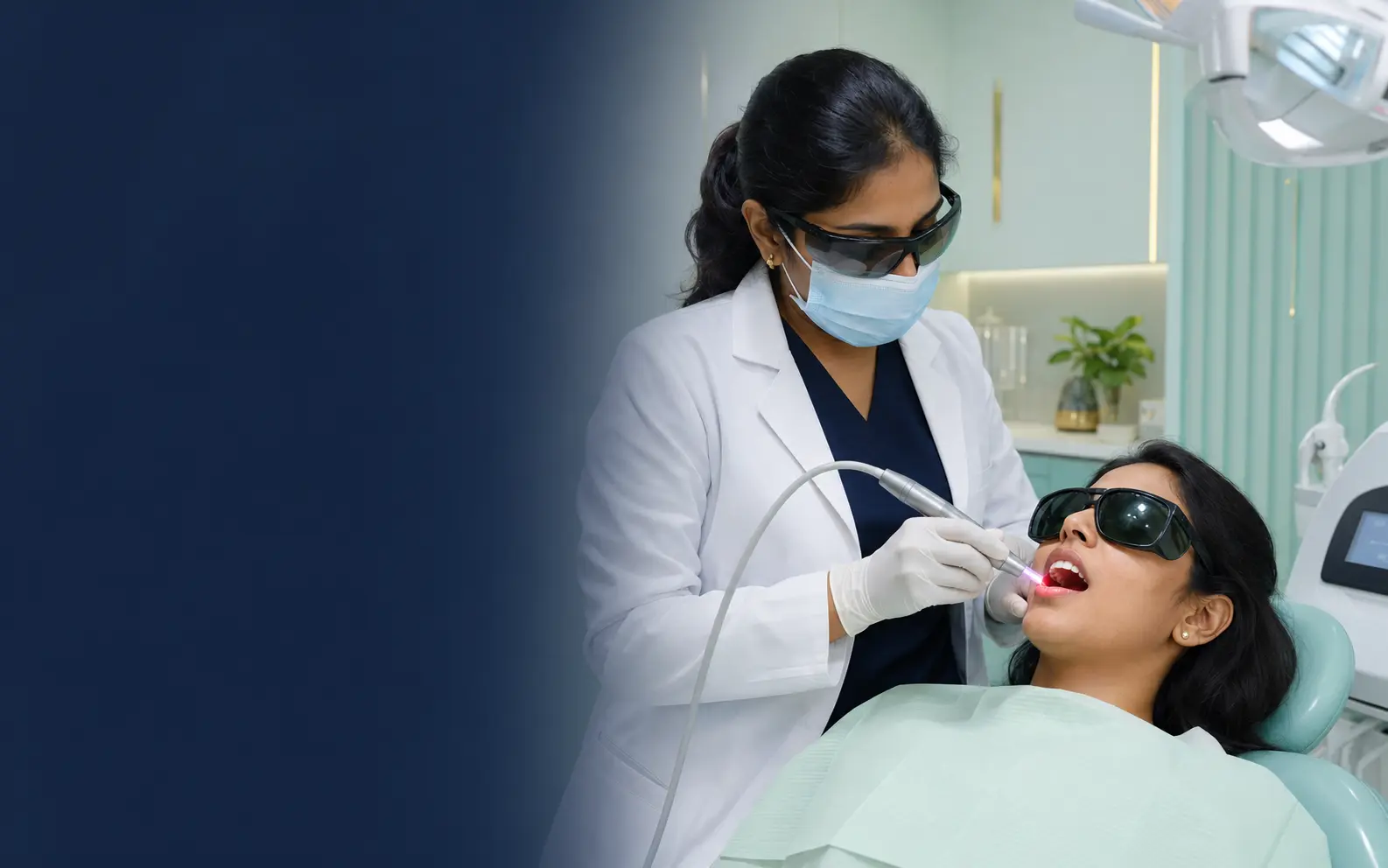
Learn about laser dentistry in Vijayawada with fellowship-trained Dr. Sowmya. Selected soft-tissue applications are considered after clinical evaluation.
Dr. Sowmya has completed a Fellowship in Laser Dentistry in addition to her Prosthodontic and Implantology training. At Smile Craft Dental and Implant Centre in Vijayawada, laser use is considered within a complete care plan rather than promoted as a universal replacement for conventional techniques. Patients are told why a laser may be useful, what other methods exist and what recovery can realistically involve.
Common discussions may include soft-tissue contouring, management around selected restorations, certain gum procedures or other dentist-led applications. The appropriate wavelength, settings and protective measures matter. Some conditions require conventional periodontal, surgical or restorative care instead. A consultation determines whether laser-assisted treatment adds meaningful value for the individual case.
Your plan begins with a detailed examination and the records needed for an accurate diagnosis.
Dr. Sowmya explains the condition, reasonable alternatives, expected stages and maintenance before you decide how to proceed.
Selected gum-shape concerns may be considered after gum health, tooth position and biological limits are assessed.
Soft-tissue management may support visibility or margin access for certain restorative procedures.
A restrictive tissue attachment requires functional evaluation before any laser-assisted procedure is considered.
Laser use may complement, but does not replace, appropriate diagnosis, mechanical cleaning and ongoing plaque control.
Medical history, tissue condition, device settings and protective eyewear are part of responsible laser use.
Scalpel, electrosurgery or non-surgical care may remain more appropriate depending on the objective and anatomy.
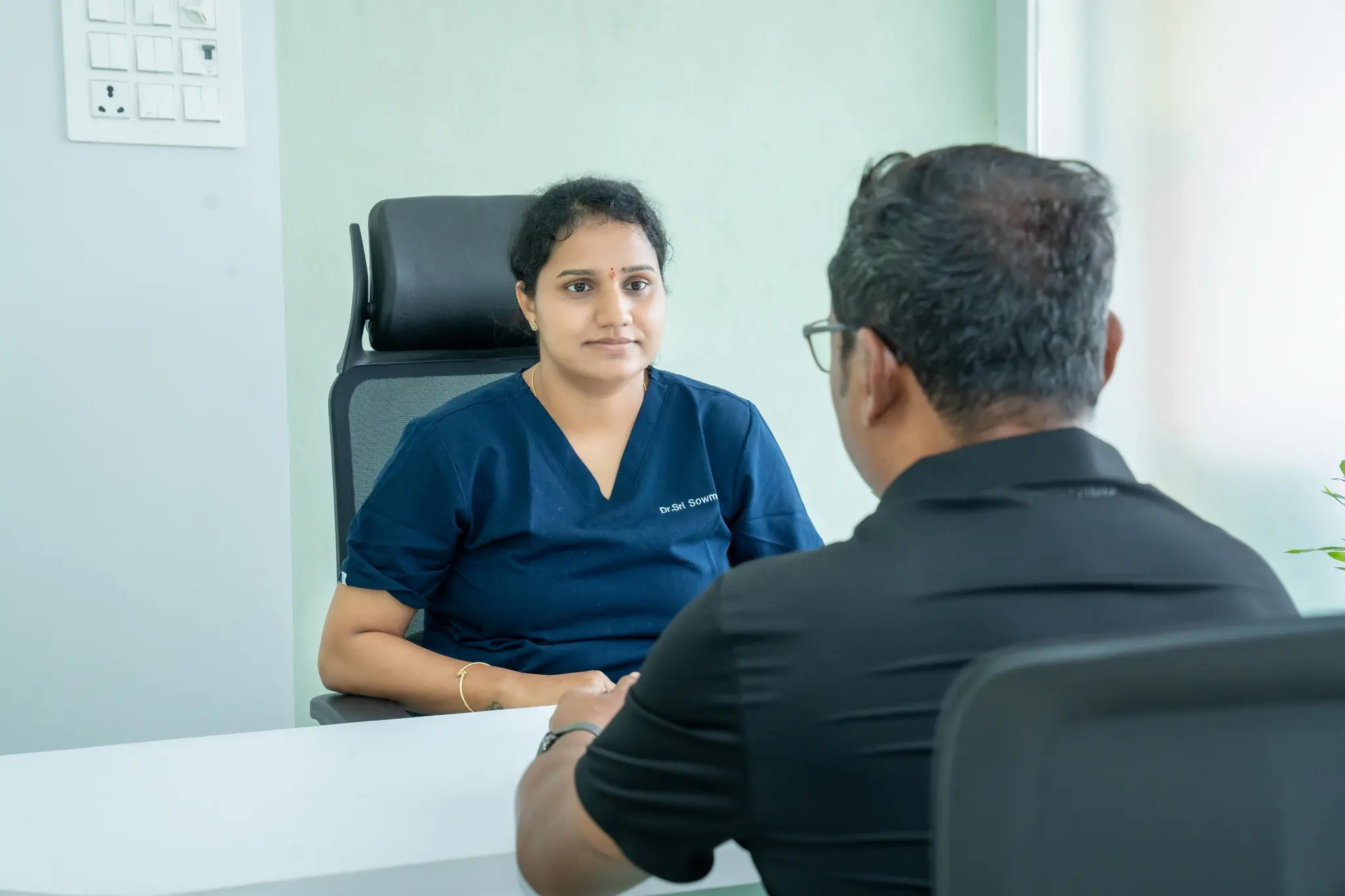
The tissue, tooth, bite and underlying cause are examined rather than selecting treatment from a technology label.
Laser-assisted and conventional approaches are discussed with relevant benefits, limitations and aftercare.
The treatment area, device parameters, eye protection and anaesthesia needs are prepared for the selected procedure.
Instructions are tailored to the procedure, and tissue response is reviewed when clinically indicated.
A written estimate can be provided after evaluation because a single advertised price may not reflect the complete plan.
Aftercare depends on the procedure and can include gentle cleaning, temporary diet modification and prescribed medication. Mild tenderness or tissue colour changes may occur during healing. Patients should follow the specific instructions provided rather than assuming every laser procedure has the same recovery.
Increasing swelling, uncontrolled bleeding, fever, worsening pain or concern about healing should be reported. Long-term results still depend on control of the original cause, such as plaque accumulation, restorative irritation or tissue position. Laser treatment is a tool within care, not a substitute for ongoing oral hygiene and review.
These answers provide general guidance. A consultation is the right place to discuss diagnosis, suitability, timing and a case-specific estimate.
Ask Dr. Sowmya about your concernNot always. Anaesthesia needs depend on the tissue, procedure and individual sensitivity. Comfort options are discussed before treatment.
No. Gum conditions have different causes and severities. Mechanical cleaning, home care, conventional surgery or specialist periodontal treatment may be required.
It can offer advantages for selected tasks, but effectiveness depends on correct diagnosis, device, settings and operator training. The appropriate method is chosen for the clinical objective.
Share your concern and preferred time. The clinic will confirm appointment availability by email or phone.